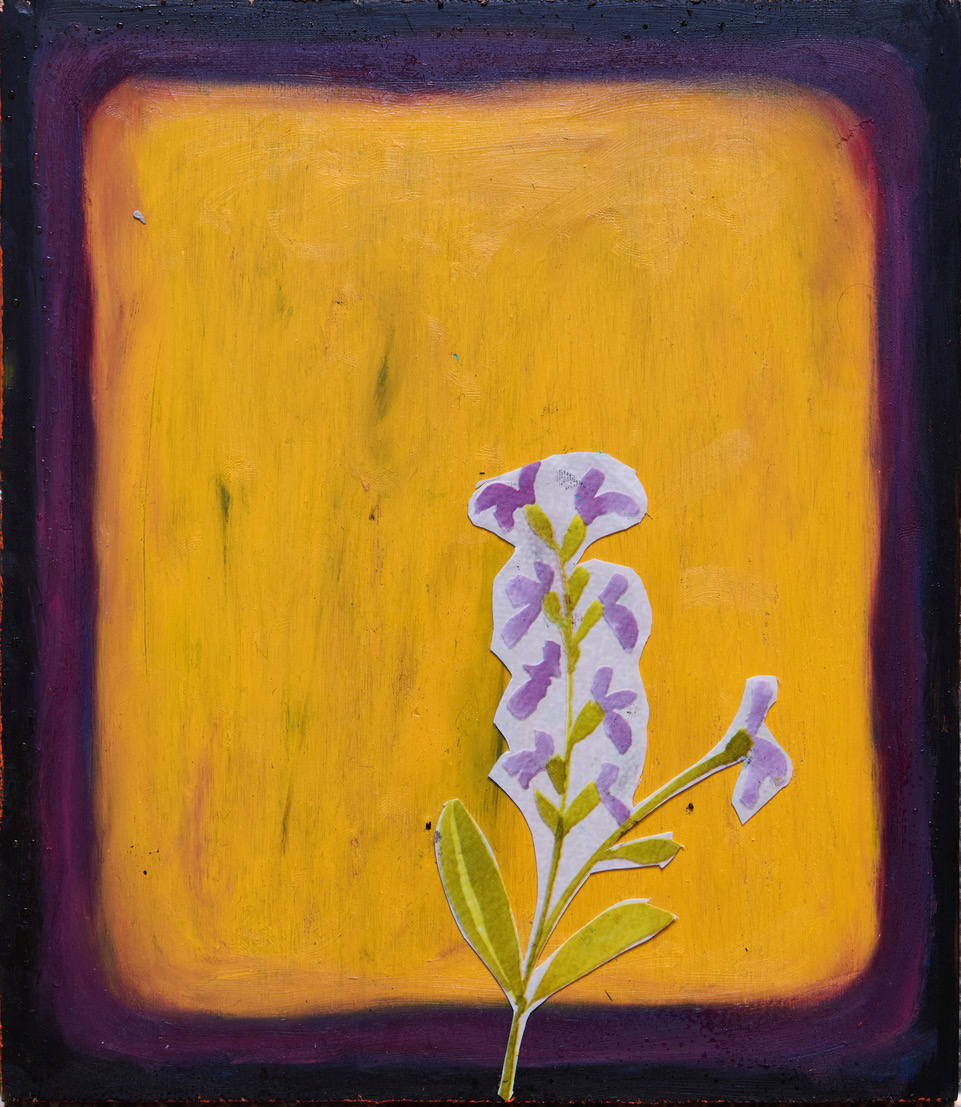
Théo Levillain (Clermont-Ferrand, Prancūzija)
Prof. dr. Remigijus Venckus (Vilnius Tech – Vilniaus Gedimino technikos universitetas), medijų menininkas ir kritikas, www.voruta.lt
Jau ne pirmus metus Kauno mieste vyksta meno rezidencija. Joje dalyvauja kūrėjai iš skirtingų vidutinio dydžio miestų partnerių tinklo „CreArt 3.0“. Rezidenciją organizuoja VšĮ „Artkomas“ – Kauno kūrybinių industrijų centras.
„CreArt 3.0“ yra Europos Sąjungos finansuojamas kultūrinės partnerystės projektas, skirtas skatinti šiuolaikinio meno kūrimą, sklaidą ir bendradarbiavimą tarp vidutinio dydžio Europos miestų. Projektas remiasi ilgalaike tarptautine menininkų, kuratorių ir kultūros profesionalų mobilumo programa. Projekto dalyviai bando didinti šiuolaikinio meno prieinamumą ir matomumą viešosiose erdvėse; stiprinti kultūrinį švietimą ir auditorijų įtraukimą. Projektas remia jaunus ir kylančius menininkus, suteikia jiems galimybes kurti ir pristatyti savo darbus tarptautinėje erdvėje. „CreArt 3.0“ projekte dalyvauja 13 Europos miestų: Kaunas (Lietuva), Liepoja (Latvija), Skopjė (Šiaurės Makedonija), Aveiras (Portugalija), Valjadolidas (Ispanija), Venecija (Italija), Klermonas-Feranas ir Ruenas (Prancūzija), Česke Budejovice (Čekija), Oulu (Suomija), Regensburgas (Vokietija), Zagrebas (Kroatija) ir Lviv (Ukraina). Lietuvoje projektą koordinuoja Všį „Artkomas“[1]. Kaip ir kiekvienais metais, taip ir šiais, kūrybos rezultatai yra pristatomi viešoje parodoje. Apie tai toliau ir bus šis tektas.
Neretai stebėdamas meno rezidencijų veiklas ir rašydamas apie jų parodas prieinu tam tikros universalios tezės, leidžiančios identifikuoti meno rezidencijos fenomeną. Nesuklysiu teigdami, kad meno rezidencijose kuriamas šiuolaikinis kokybiškas vizualusis menas dažnai išsiskiria tarpdiscipliniškumu. Jis veikia kaip savita ir individuali komunikacijos forma, stiprina tarptautinius ryšius, bei keičia vietovės kultūrinį foną. Maža to, menas žiūrovą paverčia jautresniu ne tik sau pačiam, bet ir aplinkai, ugdo vizualinį raštingumą.
Dažnai meno rezidencijos kviečia ne tik pačius kūrėjus, bet ir žiūrovą įsitraukti į diskusiją apie meno patirtį. Kiekvienas kūrinys reikalauja puoselėti suvokimą per kontekstą ir santykį su kitais menais. Tad meno rezidencijos rezultatus pristatančioje parodoje kiekvieną kūrinį neturėtume vertinti atskirai. Viską lemia bendra kūrinių sąveika, ženklinanti tarpkultūrinį meno dialogą.
Šių metų rezidencijos dalyviai yra Frascesco Casti (iš Venecijos, Italijos), Guilherme Sota (iš Aveiro, Portugalijos), Nataliya Ilchuk (iš Lvivo, Ukrainos), Théo Levillain (iš Klermonas-Feranas, Prancūzijos). Dalyvių sukurto meno paroda visuomenei duris atvers 2025 m. birželio 12 d. 17:00 val. Lietuvos dailininkų sąjungos Kauno skyriaus galerijoje „Drobė“ (Drobės g.62, Kaunas). Parodą galima apžiūrėti iki birželio 30 d.
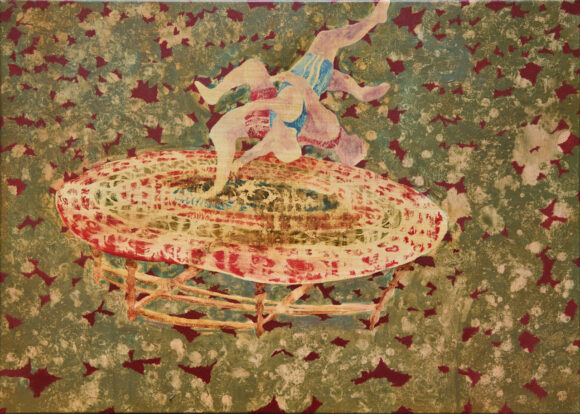
Frascesco Casti (Venecija, Italija) plėtojamos meninės kūrybos pagrindas yra aplinkos stebėjimas. Autorius, kaip klasikinis filosofas, stebi tikrovę ir svarsto apie tai kas yra regima ir tai kas slypi už akivaizdumo. Tikriausiai dėl to jo kūryboje atsiranda vietos ir ironijai, ir romantiniam pasaulio užregistravimui[2].
Kūriniai išsiskiria figūratyvumu bei iš tekstūrų sudaryto dekoratyvumo. Įdomu tai, kad sukurtos figūratyvinės struktūros atrodo esančios nuolatiniame judėjime. Paveikslo forma tarytum netveria savo ribose. Kūriniai provokuoja žiūrovą galvoti apie tai jog iš plokštumos veržiasi figūros judėjimas laike ir erdvėje.
Aiškiai deklaruojamą tekstūrų žaismą galime traktuoti kaip kūrinio odą. Už jos slypi kontekstualus pasakojimas, o žiūrovui yra keliama užduotis demaskuoti turinį pasitelkiant asociatyvius prisiminimus ir nuojautą apie tikrovės galimus pokyčius.
Čia taip pat galime pastebėti siurrealizmo ženklų. Jie leidžia mums suvokti apie tai, kad tikrovė yra transformuoja į subjektyviai patiriamą ir simboliškai angažuotą struktūrą[3]. Dažnas figūrinės kompozicijos centre atsidūręs personažas neišsiskiria labai aiškiais veido bruožais. Taip yra sukuriama miglotos, užmarštyje skęstančios atminties aliuzija. Čia atmintis tampa ne linijinio pasakojimo įkaitu, bet vizualinio pasaulio likučių rinkiniu[4].
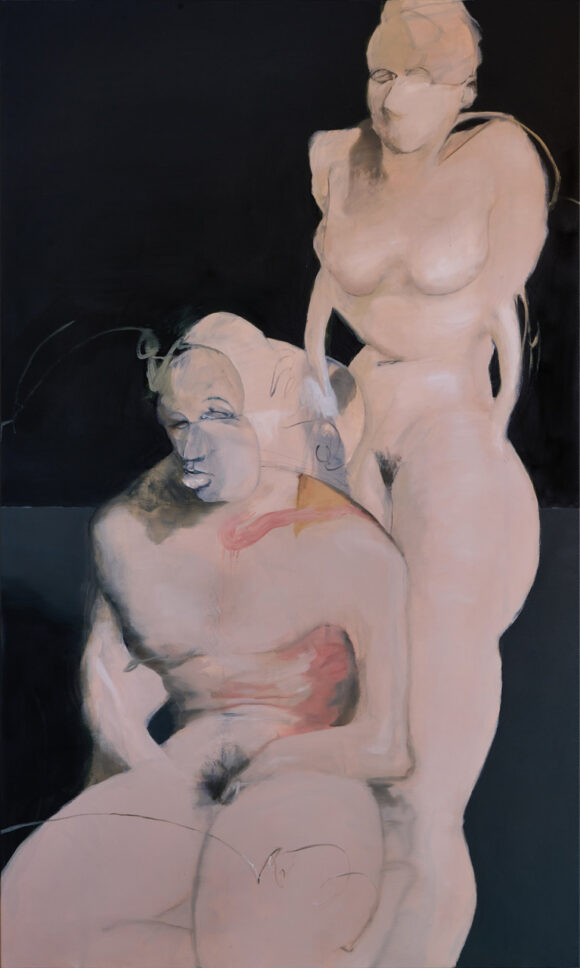
Guilherme Sota (Aveiras, Portugalija), kuria tarpdisciplininį meną. Autorius gausiai taiko skirtingas medijas: tapybą, piešinį, muziką, instaliaciją, etc. Atitinkama medija kūryboje randa savo vietą taip, kad pats kūrinys virsta įtaigia žiūrovo įsitraukimo sąlyga. Čia persipina gyvenimo, mirties, seksualumo temos. Maža to yra pastebimas net autoriaus dėmesingumas ikonografijai ir jos kritikai. Kūriniai suponuoja esant ir tam tikram laisvės kurti ir laisvės interpretuoti gestui[5].
Kūriniai mums leidžia suvokti tai, kad menas, kaip išraiškos ir komunikacijos priemonė, yra reiškiamas ženklų kombinacijomis. Kūrinys tampa išradinga ir unikalia ženklų sistema. Jis perduoda prasmes, kurios kyla ne tik iš nuorodų į tikrovę, bet ir iš ypatingo, savito būdo, kaip šios nuorodos gali būti dekonstruojamos ir iš naujo komponuojamos. Pasirinkdamas vaizduoti tikrovę neslepiančias kūno formas, autorius jas transformuoja taip, kad atsirastų naujos, eksperimentinės ir intriguojančios reikšmės. Jos nėra įmanomos be kūrybinio veiksmo ir be kūrybinio interpretavimo[6].
Paveikslo struktūrą lemiančios ekspresyvios figūrų formos neleidžia autoriui atsitraukti nuo kintančio erdvėlaikio. Tai laužo įprastą tikrovės vaizdavimą. Figūros vaizduojamos taip, kad akivaizdžiu lieka meditacinis ir grafinis jautrumas aplinkai ir jos struktūroms. Menininko plėtojama strategija leidžia figūrą traktuoti kaip egzistencinę būklę, o ne vien tik kaip fizinį kūną. Maža to deformuoti veidai įtvirtina nuasmeninimo gestą bei kūną leidžia traktuoti kaip vizualinį fenomeną[7]. Kūnas mums pristatomas kai aktualus psichologinės patirties laukas.
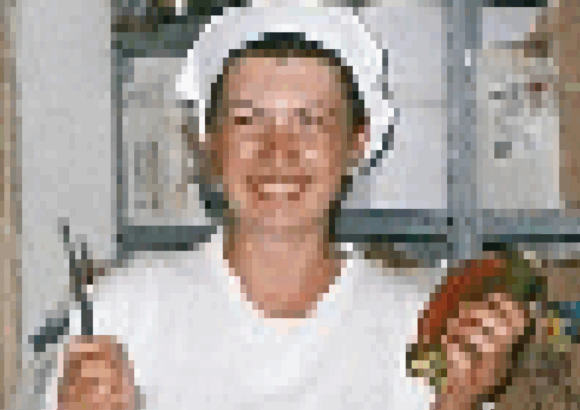
Nataliya Ilchuk (Lviv, Ukraina) kūryba atstovauja eksperimentinį medijų meno lauką. Neryškus, taškinis (iš pikselių sudarytas) atvaizdas – tai nestabilumo ženklas, nuoroda į ankstesnį skaitmeninių medijų stovį, būseną, evoliucijos etapą. Galiausiai – tai ir dabarties požiūrio į tam tikras asmenų grupes reprezentacija[8].
Kūrinius galime suvokti kaip aktualius ženklus nes autorė neslepia klausimo apie visuotiną požiūrį ar nusistatymą į ukrainiečių tautą. Priverstinė migracija, nutikusi dėl karo, tapatybę paverčia nestabilia, migruojančia, net „išplauta“. Socialinė kūrinio potekstė aktualizuoja pokyčių įamžinimo poreikį, verčia permąstyti įvairovės teisę būti ar net pačios būties kitimą ir net diskriminacijos klausimus[9].
Kūriniuose taip pat persipina ekonominės migracijos ir technologinio progreso klausimai. Autorės kūryba mums leidžia suvokti, kad naujos vaizdavimo ir vaizdo reprodukavimo technologijos nėra kūrybinės aplinkos priedas, kaip ir nėra vien tik informacijos perdavimo apie pasaulį priemonė. Jos iš tikro yra ir pati aplinka, ir pati informacija. Vietoj objekto – jo optinis atvaizdas, vietoj gyvo kūno – fotografija, vietoj tikrovės – reprodukcija. Būtent per šias formas kuriamas naujas suvokimo būdas. Kūrinys atskleidžia kur kas daugiau tiesos apie pasaulį per eksperimentines elektronines medijas, nei galime iš karto pastebėti plika akimi, neparuošta atidžiam stebėjimui[10].
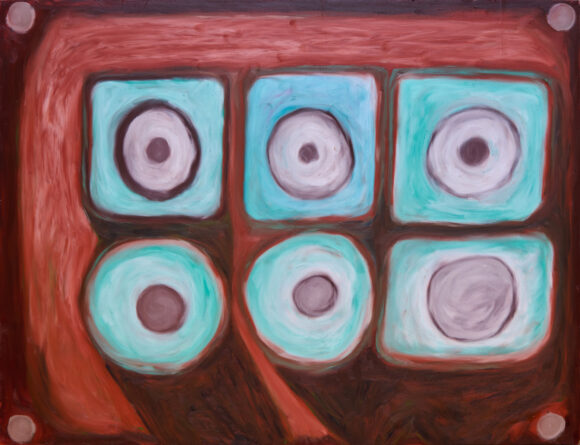
Théo Levillain (Clermont-Ferrand, Prancūzija) savo kuriamame mene tyrinėja kasdienybę. Kuri tik iš pirmo žvilgsnio gali atrodyti banali. Autorius stebi aplinką, kurioje atsiduria lyg niekada anksčiau nepatirtoje terpėje. Todėl jis kūriniuose perteikia aptiktų, naujai pastebėtų objektų / subjektų fragmentus[11].
Maža to jo kūryba taip pat yra grindžiama kolektyvinio bendradarbiavimo principu. Aptinkami ir renkami daiktai (ypač sendaikčių turguje) provokuoja naujas kūrybines idėjas. Kartais kūryboje menininkas palieka daiktus tokius, kokie jie yra. Nors daiktai nėra pakeičiami, tačiau drąsiai yra dekonstruojamos jų pirminės paskirtys[12]. Pasitelkdamas meno kūrybą autorius reiškia savo asmeninę atsakomybę ir siekį išsaugoti kultūrą. Per meninį aktą jis išlaiko savo mastymo laisvę.
Plėtojamas meninės kūrybos metodas remiasi fragmentine / dekonstruktyvia logika. Santykis su rastu objektu yra ne tik apmąstomas kaip estetinė patirtis, bet ir konceptualus būties išgyvenimas. Tai lemia refleksijų grandinę, vedančią nuo autoriaus, lik žiūrovo patirties analizės bei savikritikos[13].
Taikydamas meno raiškos priemones autorius kvestionuojama meno, kaip gražaus daikto, objekto sąvoka. Kasdieniškus objektus menas iškelia kaip vertus pamatyti naujai ir patirti estetiškai neįprastus[14]; tad vizualūs kūriniai atspindi mūsų laiką ir vietą istorijoje.
Reziumuojant šią meno parodą galima pastebėti, kad šiuolaikinė kūryba išsiskiria vizualiniu daugiasluoksniškumu ir konceptualumu, atveriančiu daugiakryptės turinio interpretacijos galimybes. Analizuotiems kūriniams būdinga kvestionuoti tikrovę, užimti tam tikrą tarpinę poziciją tarp figuratyvumo ir abstrakcijos. Taip pat yra aktualizuojama žmogaus atvaizdo deformacija, kūno fragmentacija, ervėlaikio išplėtimas. Žiūrovas skatinamas įsigilinus į kūrinį dar kartą perkainoti žmogaus būsenas, tapatybę, atmintį ar net socialines bei politines realijas. Meno rezidencijos metu yra kuriama nauja, patyrimu grįsta kalba. Čia meistriškai susipina tikrovės atvaizdų deformacija, spalvinės įtampos, asociatyvūs naratyvai.
***
Prof. Ph. D. Remigijus Venckus (Vilnius Tech – Vilnius Gediminas Technical University), media artist and critic
AN OPPORTUNITY TO EXPLORE THE WORLD IN AN UNCONVENTIONAL WAY
For a number of years, an art residency has been in operation in Kaunas. The project involves artists from various medium-sized cities that are part of the “CreArt 3.0” partner network. The residency is organised by “Artkomas” (the Kaunas Creative Industries Centre). “CreArt 3.0” is a cultural partnership project funded by the European Union.
The objective of the project is to promote contemporary art creation, dissemination, and cooperation between medium-sized European cities. The project is grounded in a long-term international mobility programme for artists, curators and cultural professionals. The project’s participants are driven by the objective of enhancing the accessibility and visibility of contemporary art in public spaces, whilst also endeavouring to fortify cultural education and audience engagement. The project is designed to support young and emerging artists, providing them with opportunities to create and present their work in an international context. Thirteen European cities are participating in the CreArt 3.0 project: Kaunas (Lithuania), Liepāja (Latvia), Skopje (North Macedonia), Aveiro (Portugal), Valladolid (Spain), Venice (Italy), Clermont-Ferrand and Rouen (France), České Budějovice (Czech Republic), Oulu (Finland), Regensburg (Germany), Zagreb (Croatia), and Lviv (Ukraine). In the context of Lithuania, the coordination of the project is overseen by the organisation known as „Artkomas“[15]. As is customary, the results of the creative work are presented at a public exhibition. This topic will be discussed in greater detail in the article.
Frequently, in the course of observing the activities of art residencies and writing about their exhibitions, I arrive at certain universal theses that facilitate the identification of the phenomenon of art residencies. It is evident that contemporary visual art created in art residencies is frequently distinguished by its interdisciplinary nature. It functions as a distinctive and personal form of communication, thereby reinforcing international relations and effecting a transformation in the cultural milieu of the region. Furthermore, art has been demonstrated to engender heightened sensitivity in the viewer, not only to their own internal world but also to their external environment. It has been shown to foster the development of visual literacy.
It is evident that art residencies frequently extend an invitation to not only artists in residence, but also members of the audience, with a view to encouraging discourse on the subject of art. It is imperative that each work is understood within the context of its own medium and in relation to other artistic forms. Consequently, it is imperative to refrain from evaluating each work individually within the context of an exhibition that showcases the outcomes of an art residency. The exhibition as a whole is determined by the overall interaction of the works, which marks an intercultural dialogue between art forms.
The participants of this year’s residency are as follows: Francesco Casti (Venice, Italy), Guilherme Sota (Aveiro, Portugal), Nataliya Ilchuk (Lviv, Ukraine), and Théo Levillain (Clermont-Ferrand, France). An exhibition of the participants’ work will be opened to the public on 12 June 2025 at 5 p.m. at the Kaunas branch of the Lithuanian Artists’ Association, „Drobė Gallery“ (Drobės st. 62, Kaunas). The exhibition will remain open until 30 June.
The artistic oeuvre of Francesco Casti (Venice, Italy) is predicated on environmental observation. In a manner reminiscent of a classical philosopher, the author engages in observation of reality and reflection on that which is visible and that which lies behind the obvious. This may be the underlying reason for the presence of both irony and a romantic perspective in his work[16].
The works are distinguished by their figurative representation and decorative textures. It is noteworthy that the figurative structures appear to be in perpetual motion. The configuration of the painting appears to exceed its conventional limits. The works prompt viewers to contemplate the movement of figures in time and space, transcending the confines of the plane.
The playfulness of the textures is clearly evident and can be considered the work’s skin. A contextual narrative lies behind it, and the viewer is tasked with uncovering the content by using their associative memories and intuitions about possible changes in reality.
Furthermore, there are indications of surrealist influence. It is through this process that we are able to comprehend the manner in which reality is transformed into a subjectively experienced and symbolically engaged structure. The subject of the figurative composition frequently exhibits facial features that are not clearly delineated. This phenomenon can be likened to the fading memory of a distant event gradually sinking into the abyss of oblivion. In this context, memory is no longer constrained by a linear narrative; rather, it is represented as a collection of vestiges from the visual world[17].
Guilherme Sota, a Portuguese artist based in Aveiras, is known for his interdisciplinary artistic practice. The author employs a diverse array of media, including painting, drawing, music, and installation, among others. The medium employed is selected with such discernment that the work itself becomes a condition for the viewer’s involvement. The thematic elements of life, death and sexuality are intricately interwoven. Furthermore, the author’s discerning engagement with iconography and its critique is evident. The works in question appear to indicate a certain degree of freedom with regard to both creation and interpretation[18].
The study of works of art enables us to comprehend the manner in which art functions as a medium of expression and communication, whereby combinations of signs are employed to convey meaning. The transformation of a work of art into an inventive and unique system of signs is a process that merits closer examination. The text conveys meanings that arise not only from references to reality, but also from the particular, distinctive way in which these references can be deconstructed and recomposed. The author’s decision to depict body forms that do not obscure reality results in the emergence of new, experimental, and intriguing meanings. It is evident that these phenomena are only achievable through the implementation of creative action and interpretation.[19].
The expressive forms of the figures that determine the structure of the painting prevent the artist from distancing himself from the changing space-time. This representation disrupts the conventional paradigm of reality. The figures are depicted in such a manner that a meditative and graphic sensitivity to the environment and its structures remains evident. The strategy developed by the artist enables the figure to be regarded as an existential state as opposed to being regarded as merely a physical body. Furthermore, the deformed faces serve to reinforce the gesture of depersonalisation, thereby allowing the body to be regarded as a mere visual phenomenon.[20]. The body is presented as a relevant field of psychological experience.
Nataliya Ilchuk (Lviv, Ukraine) is a prominent figure in the experimental field of media art. The presence of a blurry, pixelated image is indicative of instability, serving as a reference to the earlier state of digital media and representing a stage in the evolution of technology. In essence, it is also indicative of the prevailing attitude towards specific demographic groups[21].
The works can be perceived as relevant symbols due to the author’s transparent approach in addressing the general attitude and prejudice towards the Ukrainian people. The phenomenon of forced migration, precipitated by armed conflict, engenders a state of identity that is characterised by its instability, mobility and even its dissolution. The social subtext of the work under scrutiny here highlights the need to commemorate change, forcing us to rethink the right of diversity to exist, or even the very nature of existence itself, and even issues of discrimination.[22].
The works also interweave issues of economic migration and technological progress. The author’s work demonstrates that new technologies of representation and image reproduction do not merely constitute an addition to the creative environment; rather, they serve as a means of transmitting information about the world. It is evident that both the environment itself and the information itself are pertinent to this discussion. In lieu of an object, there is its optical image; in lieu of a living body, there is a photograph; in lieu of reality, there is reproduction. It is through these forms that a new way of perception is created. A work of art reveals much more truth about the world through experimental electronic media than can be perceived immediately by the naked eye, without careful observation[23].
Théo Levillain (Clermont-Ferrand, France) is an artist who specialises in the depiction of quotidian life. Upon initial consideration, the subject may appear unremarkable. The author’s observations of his surroundings are reminiscent of an unfamiliar environment. Consequently, he incorporates fragments of newly discovered objects and subjects in his oeuvre[24].
Furthermore, the artist’s oeuvre is founded on the principle of collective collaboration. The act of procuring objects, particularly those obtained from flea markets, has been observed to serve as a catalyst for the genesis of novel creative concepts. In certain instances, the artist elects to incorporate objects into his work in their original state. Despite the absence of replacement, the objects’ original purposes are deconstructed in a bold manner.[25].
The author employs artistic creation as a medium to articulate his personal responsibility and aspiration to contribute to the preservation of culture. The artist’s engagement with artistic praxis is indicative of an ongoing commitment to the preservation of personal autonomy of thought.
The artistic method that has been developed is founded upon a logic of fragmentation and deconstruction. The relationship with the found object is contemplated not only as an aesthetic experience, but also as an experience of conceptual existence. This process establishes a sequence of reflections, originating from the author and culminating in the analysis of the viewer’s experience and self-criticism.[26].
Through the utilisation of artistic means of expression, the author interrogates the conventional concept of art as a beautiful object. The elevation of quotidian objects through artistic endeavours enables them to be regarded anew and to be experienced in a manner that diverges from their conventional perception[27]. Consequently, visual works serve as reflective documents of both the historical epoch and the geographical locale in which they are produced.
To conclude this discussion on the subject of the art exhibition, it is important to note the defining characteristics of contemporary art. This genre is distinguished by its visual multi-layeredness and conceptuality, which engenders a multitude of possible interpretations of the content. The works analysed in this study are notable for their interrogation of reality, occupying a distinct intermediate space between figuration and abstraction. The deformation of the human image, the fragmentation of the body, and the expansion of time are also actualised. The viewer is encouraged to engage more profoundly with the work, and to re-evaluate such concepts as human conditions, identity, memory, and even social and political realities. It is posited that the establishment of a new, experience-based language is an outcome of the art residency. In this instance, the artist has skilfully intertwined three distinct elements: the deformation of images of reality, colour tensions, and associative narratives.
[1] Plačiau žr. CreArt 3.0. Prieiga internetu: internete https://creart2-eu.org/creart-3/ (2025-06-04).
[2] Casti, F. (2025). Kūrybos paaiškinimai. Pateikta el. paštu.
[3] Pračiau žr. Fosterm H. (1995). Compulsive Beauty. Cambridge, Massachusetts: MIT Press.
[4] Plačiau žr. Hirsch, M. (1997) Family Frames: Photography, Narrative, and Postmemorys. Cambridge, Massachusetts:: Harvard University Press.
[5] Sota, G. (2025). Kūrybos paaiškinimai. Pateikta el. paštu.
[6] Remtasi Vázquez, A. S., Kattau, C. (2015). Painting as Language. Art in Translation, vol. 3 (2), p. 135 – 140.
[7] Remtasi Jones, A. (1998). Body Art/Performing the Subject. Minneapolis: University of Minnesota Press.
[8] Remtasi Ilchuk, N. (2025). Kūrybos paaiškinimai. Pateikta el. paštu.
[9] Žr. ten pat.
[10] Remtasi Kuryluk, E. (2024). Hyperrealism. Art in Translation, vol. (15)4, p. 422, 426.
[11] Levillain, T. (2025). Kūrybos paaiškinimai. Pateikta el. paštu.
[12] Žr. ten pat.
[13] Remtasi Callus, I. (2015). The Non-Relation of Non-Relation: The Scale and Object of Deconstruction and Art Now. Paralax, vol. 21(1), p. 186.
[14] Remtasi Heidegger, M, Gadamer, H. G. (2023). Meno kūrinio ištaka. Vilnius: Aidai (Iš vokiečių kalbos vertė Tomas Sodeika ir Jurga Jonutytė).
[15] Requested based on publication CreArt 3.0. On the net: internete https://creart2-eu.org/creart-3/ (2025-06-04).
[16] Casti, F. (2025). Explanations of creativity. Submitted via email.
[17] Requested based on publication Hirsch, M. (1997) Family Frames: Photography, Narrative, and Postmemorys. Cambridge, Massachusetts:: Harvard University Press.
[18] Sota, G. (2025). Explanations of creativity. Submitted via email.
[19] Requested based on publication Vázquez, A. S., Kattau, C. (2015). Painting as Language. Art in Translation, vol. 3 (2), p. 135 – 140.
[20] Requested based on publication Jones, A. (1998). Body Art/Performing the Subject. Minneapolis: University of Minnesota Press.
[21] Ilchuk, N. (2025). Explanations of creativity. Submitted via email.
[22] Viewed in the same source.
[23] Requested based on publication Kuryluk, E. (2024). Hyperrealism. Art in Translation, vol. (15)4, p. 422, 426.
[24] Levillain, T. (2025). Explanations of creativity. Submitted via email.
[25] Viewed in the same source.
[26] Requested based on publication Callus, I. (2015). The Non-Relation of Non-Relation: The Scale and Object of Deconstruction and Art Now. Paralax, vol. 21(1), p. 186.
[27] Requested based on publication Heidegger, M, Gadamer, H. G. (2023). Meno kūrinio ištaka. Vilnius: Aidai (translated from German by Tomas Sodeika and Jurga Jonutytė).